Between the major rides, a water park still needs places to explore, interact and recognise as part of the destination. Not every useful addition has to deliver another descent. Selected water park accessories can give those spaces a purpose that another slide would not fulfil.
Their value depends on the gap they address. An interactive feature, a visual landmark and a themed resting area perform different jobs. Treating all three as decoration misses the opportunity to connect participation, circulation and the park’s identity without filling every available corner with equipment.
Participation without Another Descent
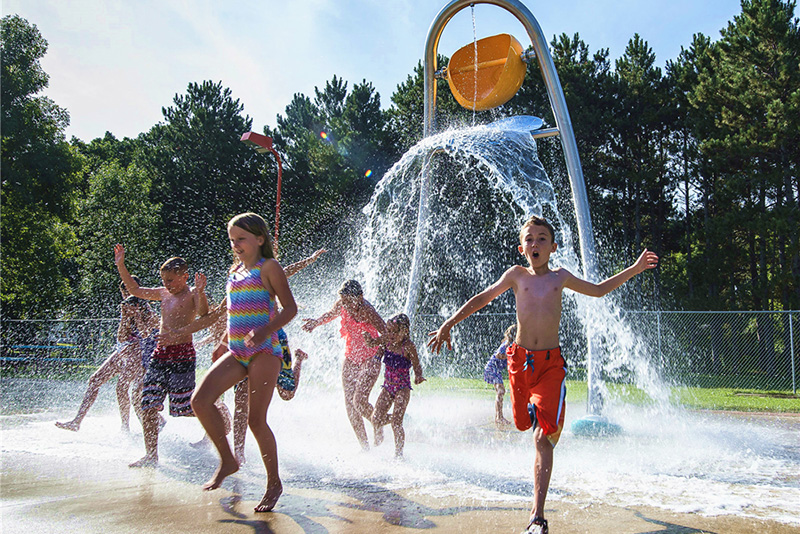
A slide generally takes a rider along a defined route from a starting point to an exit. Interactive elements offer a different kind of involvement: aiming a water cannon, moving through sprays or activating a feature. The attraction is the interaction itself rather than a journey down a flume.
That distinction broadens the activity mix. Visitors who are not joining the next slide queue may still engage with an adjacent feature, while groups can move between different forms of participation. The purpose of park water features is not to imitate the excitement of a taller ride.
The choice still needs a defined audience and setting. A water park manufacturer can combine features around the intended use, but adding more items does not automatically create a better activity zone. Each element needs a reason to occupy its position within the arrangement.
Intensity can vary without making every zone a separate attraction. A spray arch, an aiming activity and a tipping feature create different patterns of interaction. Planning around those differences gives the design more substance than repeating the same feature in several colours.
The Space between Attractions
Circulation is not unused land waiting for equipment. People approach, watch, wait and leave attractions through that space, often simultaneously. An addition has to work with those movements rather than borrowing room that an existing queue or exit already depends on.
The placement of water park accessories therefore needs a view beyond their own dimensions. An appealing feature can still interrupt a route if participants gather where others need to pass. The relationship between active use and movement around it matters more than a product image.
A useful layout distinguishes the activity zone from observation and through routes. The water park manufacturer needs to see those relationships on the site drawing. Fixed structures, access points and service areas then become part of feature selection rather than obstacles discovered after the arrangement is approved.
Connections can also be visual rather than physical. A repeated form or colour can link two areas without adding another obstacle between them. Sometimes the contribution is a clear edge or recognisable meeting point, leaving the main route open instead of occupying it.
A Visual Identity at Walking Pace
Large attractions establish a skyline, but visitors experience much of a park from paths and gathering areas. Smaller elements can carry the visual identity into those spaces. The task is to give them a relationship with the main attractions without making every object compete for attention.
Jinchao’s interactive range includes ground sprays, spray arches, water cannons, activators and tipping buckets. Its themed configurations can draw on tropical, ocean, pirate, jungle or local ideas. These options provide different starting points for water games equipment manufacturers that connect activity with the surrounding visual setting.
The company’s Kids Aqua Play range includes stainless steel and fibreglass options. Material and appearance remain separate decisions from placement: a decorative form still needs to suit the role assigned to it. A recognisable theme cannot compensate for an activity installed in an unsuitable location.
Visual consistency does not require identical equipment. Selected colours and recurring forms can appear on different elements while the activities remain distinct. A coherent park allows its large landmarks and smaller details to have different levels of emphasis, rather than asking every feature to announce itself loudly.
Value That Survives Daily Operation
Maintenance access tests the practical quality of a decorative idea. A cover that makes a component difficult to inspect changes the operating task behind the finished appearance. Inspection points, connections and service routes need to remain reachable after the themed elements are installed.
The maintenance needs of water park accessories differ by function. Spray outlets, moving elements and decorative surfaces do not present the same inspection questions. An equipment-specific routine gives staff a clearer task than treating the whole zone as one visually checked collection.
A theme can distinguish its enduring identity from details that may be refreshed later. Major forms and colour relationships can remain stable while graphics, panels or lighting scenes change. The initial design then supports updates without requiring the park to abandon its recognisable character.
For a water park manufacturer such as Jinchao, a brief identifies the missing activity or visual connection before listing preferred products. Its feature combinations and themed design options can then be discussed against that purpose, alongside the space and maintenance access available.
Well-placed park water features make the areas beyond the slides worth using in their own right. Their contribution lies in the activity they offer, the spaces they connect and the care they require. An overlooked space can become a destination when visitors gain something different to do there.
