A jacket may spend more time folded in a suitcase or compressed in a wardrobe than it does being worn. Over time, repeated bending, pressure, and changes in storage conditions can affect the structure responsible for retaining warmth. For garment developers, the durability of thermal insulation fabric is not simply a question of initial heat retention; its ability to recover after handling also matters.
Y-Warm is associated with thermal insulation technology for apparel, making material structure and long-term performance relevant considerations when assessing insulated clothing.
What Happens Inside Insulation During Repeated Folding?
Insulation works by slowing heat transfer, often through structures that trap pockets of still air. Depending on the material, these spaces may be formed by fibers, foam cells, or other porous features. Folding places localized pressure on these structures, potentially changing their thickness, shape, and distribution.
The effect depends heavily on the material’s composition. Some fibrous fillings can shift or form uneven areas, while certain foam-based structures may become compressed at crease points. If the internal structure does not recover fully, the garment may develop thinner regions where heat can escape more readily. The durability of thermal insulation fabric is consequently linked to both its original construction and its response to repeated mechanical stress.
Not every crease indicates permanent damage. Temporary compression may disappear after a garment is unfolded and allowed to rest. More serious changes involve persistent deformation, broken fibers, material separation, or a lasting reduction in loft. Distinguishing reversible compression from structural damage is essential when evaluating a material’s suitability for clothing that is frequently packed or stored.
Material Structure and Compression Recovery
The internal architecture of insulation determines how it responds to pressure. Fibrous materials rely on the arrangement and resilience of individual fibers, while cellular materials depend on the stability and recovery of their internal pores. Flexible structures can accommodate bending more readily, although flexibility alone does not establish how well a material will recover after prolonged compression.
Thickness is another important factor, but it should not be treated as the only measure of durability. A thicker material may experience more noticeable changes in volume under pressure, whereas a thinner structure may be less affected by certain folding patterns. In practical applications, thermal insulation fabric should be assessed according to its recovery behavior, intended garment design, and expected handling conditions.
Repeated folding can also affect the way insulation interacts with other garment layers. If the material is stitched, laminated, or bonded to an outer shell or lining, stress may concentrate around seams and attachment points. Uneven tension can cause wrinkles, delamination, or local distortion. Material testing should account for the finished garment construction rather than examining the insulation layer in isolation.
Testing Durability Under Real Storage Conditions
A useful evaluation begins with a controlled folding and compression procedure. Samples can be folded along consistent lines, subjected to defined pressure, and allowed to recover for a set period. Their thickness and appearance can then be compared with measurements taken before testing. Repeating the procedure helps reveal whether performance changes gradually after multiple handling cycles.
Visual inspection provides useful information, but measurements offer a more objective assessment. Thickness recovery, dimensional stability, surface condition, and thermal resistance can all help identify changes. For garments intended for travel or compact storage, testing should also consider different folding directions, since pressure applied along one crease may affect the structure differently from pressure applied across another.
Storage conditions deserve attention as well. Prolonged compression, high humidity, and unsuitable temperatures may influence material behavior, depending on its composition. A garment stored loosely in a dry wardrobe experiences different stresses from one packed tightly in luggage for several weeks. Testing should reflect realistic storage scenarios rather than relying on a single short compression test.
Designing Insulated Garments for Longer Use
Durability is influenced by decisions made during garment development. Designers can reduce unnecessary stress by considering panel dimensions, seam placement, attachment methods, and how the finished garment is likely to be folded. Insulation should not be pulled excessively tight during assembly, as uneven tension may affect its structure and create pressure points.
Consumer care instructions also play a role in maintaining material condition. Clear guidance on folding, hanging, washing, and long-term storage helps users avoid handling practices that may damage the garment. Where a material requires recovery time after compression, allowing it to rest unfolded can help restore its original shape if the deformation is reversible.
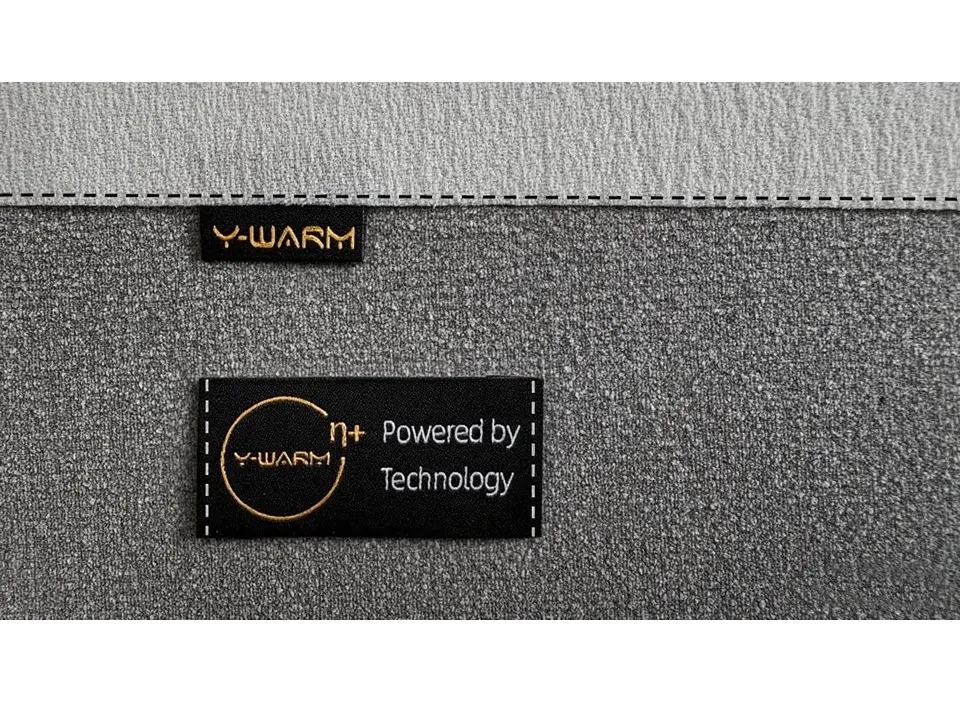
Material identity can be communicated through garment details, particularly when a brand uses a specific insulation technology. Y-Warm’s woven label indicates that a garment features Y-Warm® thermal insulation technology. This provides a recognizable identification detail for consumers, while the actual durability of the garment still depends on material properties, construction quality, and appropriate care.
Conclusion
Repeated folding is a routine part of garment use, yet its long-term effects deserve attention during material selection and product testing. Recovery after compression, structural stability, and compatibility with garment layers all influence how insulation performs over time.
A responsible green insulation company should also consider durability as part of material development, since longer-lasting products may help reduce premature garment replacement and material waste. Y-Warm develops thermal insulation technology for apparel applications, with its woven label identifying garments that use the technology. Apparel brands can learn more about Y-Warm’s solutions when developing insulated clothing designed for repeated wear and storage.
