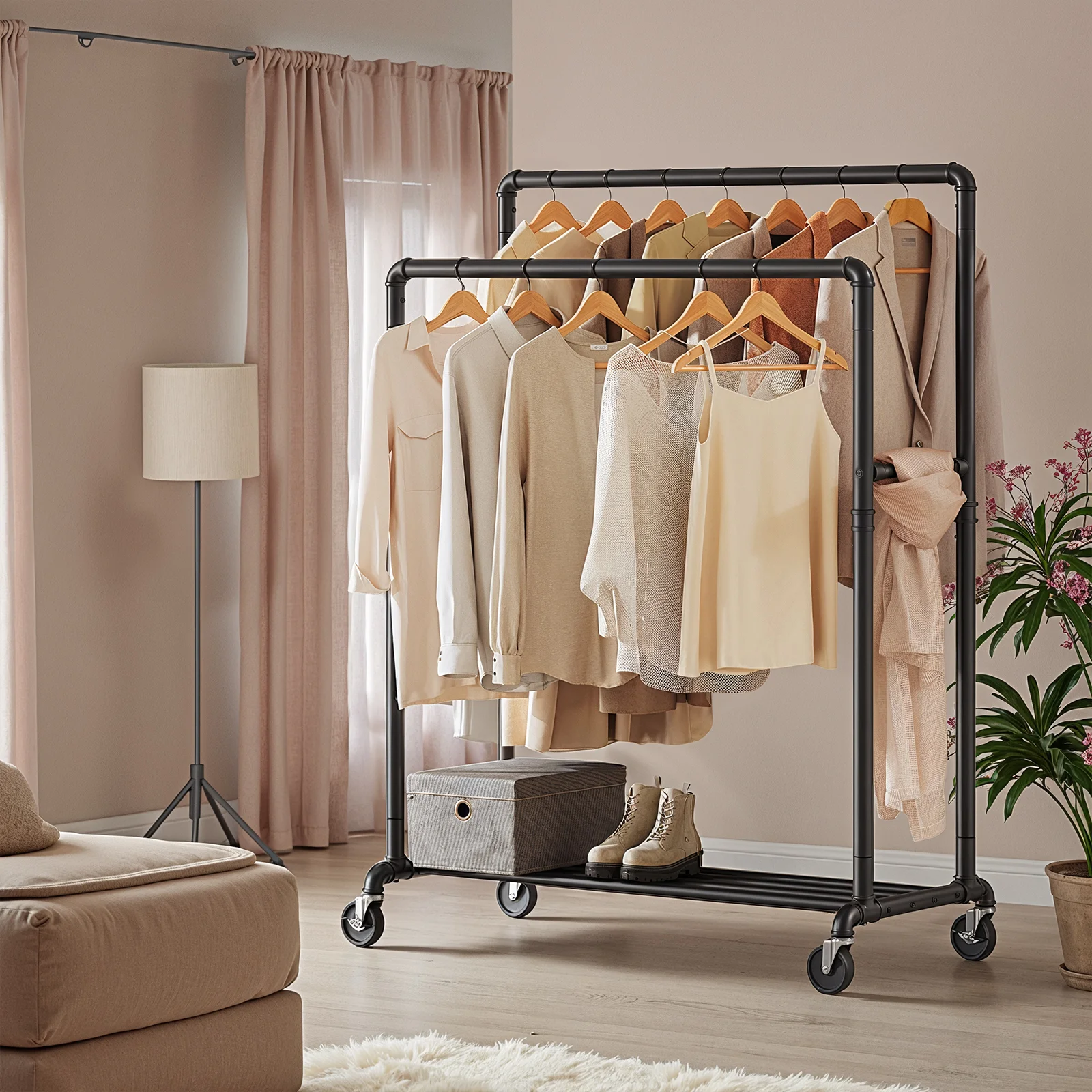
Urban living trends continue to influence residential organization. As living areas become more compact, the demand for flexible, freestanding clothing storage is growing significantly. Retailers are adapting to this shift by expanding their portfolios to include versatile garment organization tools. Providing a varied selection of hanging solutions may help businesses capture a broader segment of apartment dwellers and temporary renters who require adaptable furniture.
When curating freestanding storage, procurement teams often compare single-bar and double-bar configurations. Each structural design serves distinct consumer needs and presents different logistical considerations for international buyers. Understanding these functional differences supports more informed purchasing decisions and smoother inventory management. Retailers can use this comparison to refine their seasonal category planning and improve their merchandising strategies across various retail channels.
The Functional Appeal of Single-Bar Configurations
Single-bar clothing racks feature a minimalist aesthetic that appeals to consumers seeking streamlined storage. This straightforward design requires fewer raw materials, often translating to lighter shipping weights and reduced manufacturing costs. For retailers, these units represent an accessible entry-level product. They frequently attract shoppers needing supplementary hanging space for seasonal garments.
From a merchandising perspective, single-bar models are highly versatile and easy to display. They consume minimal floor space, making them suitable for compact retail showrooms or cross-merchandising alongside entryway benches. Buyers often source these lightweight items to target young professionals moving into apartments. The straightforward assembly process also helps reduce customer service inquiries related to installation issues.
Maximizing Capacity with Double-Bar Designs
Double-bar clothing racks offer increased hanging capacity within a similar horizontal footprint. By utilizing parallel rails, these units allow users to store significantly more garments. This increased density appeals to households with extensive wardrobes or those lacking built-in closets. Retailers can position these models as primary storage solutions for shared living spaces.
Sourcing double-bar models requires attention to structural integrity. Because they hold more weight, vertical supports must be adequately reinforced. Procurement teams should evaluate the thickness of the steel tubing and the quality of connecting joints. A sturdy double-bar unit may command a higher retail price, offering businesses the opportunity for improved margins.
Material Specifications and Mobility Features
Regardless of configuration, the materials used directly impact product longevity. Metal racks constructed from powder-coated steel are common in the industry. Retail buyers should consider whether a manufacturer uses metal or heavy-duty plastic for load-bearing joints. Higher quality materials can support positive brand perception and reduce product return rates.
Mobility is another feature consumers frequently evaluate. Racks equipped with industrial-grade casters provide flexibility for users rearranging living spaces. For retail procurement, offering a mix of stationary and rolling models broadens a catalog’s appeal. Buyers should verify that caster wheels feature locking mechanisms to prevent unwanted movement on hard flooring.
Expanding Portfolios with Enclosed Storage
While exposed garment racks are popular, many consumers prefer enclosed solutions to protect clothing from dust and direct sunlight. Retailers can diversify their offerings by exploring alternative temporary structures. For example, introducing canvas wardrobes for small spaces allows businesses to address different organizational preferences within a single product catalog. These fabric-covered units offer enhanced privacy and a cleaner visual aesthetic in shared rooms.
Fabric closets feature multiple internal compartments, combining hanging rods with stacked shelving. This hybrid design accommodates folded items alongside hanging garments. For international shipping, fabric models can be packaged flat. This compressibility allows buyers to load more units per container and potentially lower their per-unit freight expenses.
Evaluating and Selecting a Manufacturing Partner
Building a balanced inventory requires collaboration with a capable clothing rack supplier. Retailers should assess a factory’s ability to produce single and double-bar units while maintaining quality standards. A supplier with extensive manufacturing infrastructure can adapt more quickly to seasonal shifts in demand. This flexibility is vital for maintaining steady stock.
Procurement managers should also review the availability of Original Equipment Manufacturer services. Customized dimensions or proprietary packaging can help a retailer stand out. Working with a supplier offering dedicated design support allows buyers to tailor storage products to specific target demographics and regional aesthetic preferences.
Exploring Broad B2B Manufacturing Capabilities
When sourcing organizational furniture, businesses may review established international manufacturers to streamline supply chains. SONGMICS HOME operates as a comprehensive B2B furniture manufacturer. Their catalog encompasses various garment organization tools, including single-bar racks, double-rail units, and enclosed fabric closets. This breadth allows buyers to consolidate their purchasing efforts.
To facilitate wholesale distribution, they manage an extensive network of self-owned logistics facilities across multiple countries. This warehouse infrastructure supports efficient order fulfillment and helps mitigate potential shipping delays. Retail buyers might find this capability advantageous when planning large-scale seasonal rollouts or managing regular stock replenishment.
Additionally, their dedicated engineering teams are available to support custom development projects. This collaborative approach enables wholesale clients to create tailored product lines aligning with distinct brand identities. By leveraging these manufacturing services, retailers can adapt their home organization categories to meet evolving consumer expectations.
Structuring a Resilient Assortment Strategy
Successfully managing a home organization category requires a balanced approach to inventory planning. Retailers must analyze sales data to determine the optimal ratio of lightweight single racks to heavy-duty double units. Sourcing across different product tiers allows businesses to cater to varying consumer budgets.
Working closely with versatile manufacturing partners supports more agile retail operations. Centralizing procurement through a reliable network can reduce administrative overhead and improve logistical efficiency. As urban living spaces evolve, retailers equipped with adaptable, multi-functional storage catalogs are better positioned to sustain long-term commercial growth.
