Industrial mesh production requires fusing thousands of orthogonal steel intersections per minute without inducing structural warping or localized embrittlement. Engineers managing reinforced concrete structure manufacturing, security fencing fabrication, or battery shielding production face severe alignment drift and inconsistent nugget volumes.
Addressing these high-speed joining challenges demands rigorous control over multi-electrode contact pressure and secondary electrical distribution. Understanding the electro-mechanical principles behind grid fabrication is vital for eliminating weak joints and achieving repeatable, high-volume manufacturing output across demanding industrial facilities.
Contact Resistance Dynamics and Cross-Wire Thermal Mechanics
Fabricating metallic grids relies on concentrated Joule heating generated at the precise point where longitudinal and transverse wires intersect under heavy mechanical load. Initial contact resistance at the cross-section creates localized thermal energy that softens the metal matrix before forge pressure consolidates the joint.
Minor surface oxidation or wire diameter variations alter local resistance profiles, triggering thermal imbalances across the entire grid network. Production lines require high-frequency power units that compensate instantly for micro-fluctuations in material contact resistance without destabilizing nugget growth.
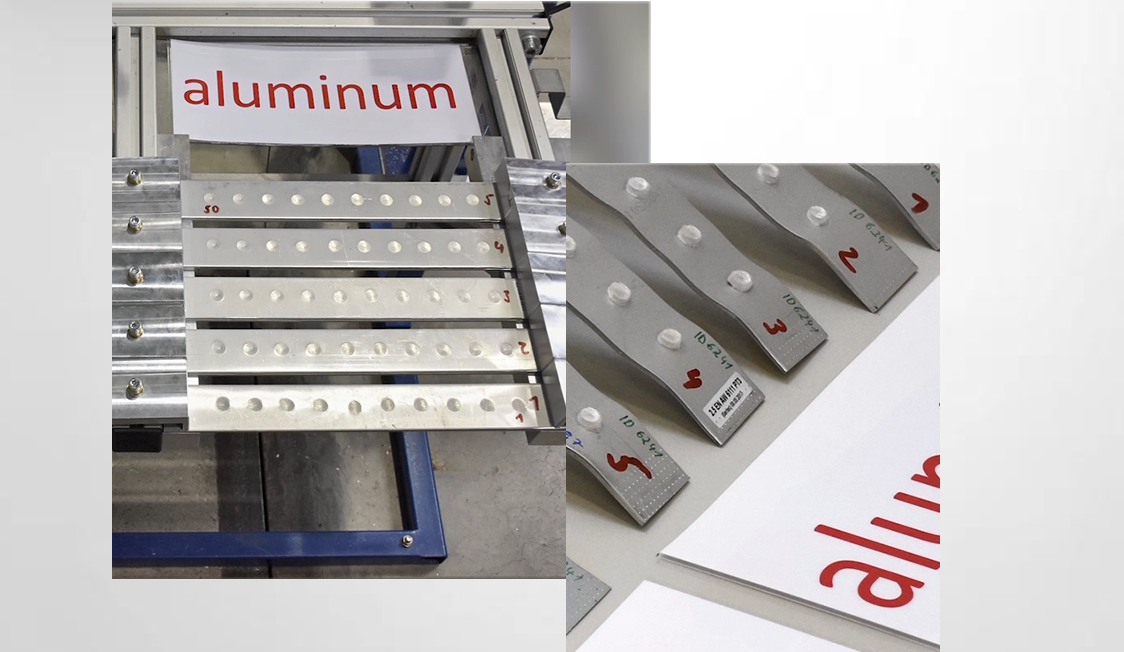
Heavy industrial manufacturing sectors frequently utilize advanced resistance welding applications to achieve structural integrity across large-scale steel and aluminum mesh panels. When executing these high-speed joins, thermal energy must remain strictly contained within the intersection to prevent parent material softening or structural distortion.
Inadequate current delivery causes cold shunts, while excessive heat input leads to severe metal expulsion and structural weakening. Controlling these transient thermal states requires sophisticated feedback loops that sample secondary parameters continuously throughout the firing cycle.
Managing Multi-Electrode Synchronization in Grid Fabrication
High-throughput industrial grid production relies on multi-gun transformer configurations capable of firing dozens of individual weld spots simultaneously or in rapid succession. Simultaneous firing introduces massive primary current draws and complex magnetic coupling between adjacent secondary circuits, risking uneven current distribution.
Transformer windings must balance electrical loads dynamically to ensure every single intersection receives identical thermal input regardless of grid position. Sunke designs specialized multi-transformer power architectures that eliminate current shunting across complex secondary busbar layouts.
Operating multiple electrode heads simultaneously generates severe electromagnetic interference that can corrupt sensitive sensor feedback loops and programmable controller logic. Engineering teams must implement robust electrical shielding and isolated low-voltage control circuits to maintain uncompromised signal fidelity during active production runs.
Furthermore, sequential firing algorithms help mitigate peak electrical grid loading while maintaining acceptable cycle times for high-volume manufacturing plants. Balancing electrical throughput with precise timing control remains a primary engineering objective during automated line commissioning.
Mechanical Alignment and Clamping Stability Across Production Lines
Maintaining strict geometric tolerances across extended metallic panels requires ultra-rigid mechanical frameworks and precision wire-indexing mechanisms during active wire mesh welding sequences. Longitudinal and transverse wires must intersect with sub-millimeter accuracy to prevent skewed grid geometries and subsequent assembly rejection.
In order to efficiently consolidate the molten nugget, heavy pneumatic clamping cylinders apply a consistent mechanical force across all of the active welding heads. An uneven distribution of pressure is introduced by electrode tips that are worn or misaligned, which ultimately results in localised thinning and structural collapse.
Long production shifts require dynamic mechanical correction because thermal expansion during continuous multi-spot firing generates physical growth in metallic wire arrays. This growth is caused by the firing of several spots simultaneously. Servo-driven indexing tables and adaptive positioning sensors are incorporated into modern machinery in order to adjust thermal drift before electrode drop takes place.
For the purpose of preventing mechanical backlash and ensuring that forge pressure is applied consistently, facility maintenance teams are required to perform routine inspections of clamping devices. The elimination of human placement errors and the achievement of remarkable repeatability are both achieved by plant operators who utilise automated wire mesh welding systems.
Selecting Robust Control Hardware for Automated Grid Assemblies
When analysing heavy-duty joining hardware, procurement professionals are required to conduct a comprehensive analysis of secondary rectification efficiency, cooling capacity, and communication bus integration capabilities. When insufficient controllers are chosen for demanding resistance welding applications, the outcome is frequent thermal throttling, component burning, and unacceptable downtime for the assembly line.
The use of solid-state switching elements and subassemblies that are UL-listed and capable of withstanding severe duty cycles without experiencing a decrease in performance is essential for industrial facilities. For the purpose of streamlining factory acceptance testing, they offer exhaustive technical documentation as well as stringent compliance dossiers.
In order to ensure complete production traceability, modern factory automation networks necessitate the interchange of data between shop-floor controllers and centralised manufacturing execution databases in a smooth manner. By integrating intelligent monitoring instrumentation, quality managers are able to analyse previous waveform signatures and check the integrity of welds across each and every manufactured panel.
Sunke delivers integrated diagnostic solutions that empower automated lines to maintain strict quality standards over millions of continuous cycles. Investing in robust control infrastructure secures long-term productivity gains and absolute compliance with international manufacturing directives.
