Semiconductor fabrication facilities depend on stable operating environments, not only inside cleanrooms but also throughout their supporting areas. Gas cabinets, chemical storage rooms, utility corridors, equipment maintenance zones, and exhaust treatment systems may contain combustible, toxic, or oxygen-displacing gases.
Effective industrial gas detection systems help facility operators identify abnormal gas concentrations and initiate appropriate responses. Selecting suitable sensors, sampling methods, and alarm arrangements is essential, while portable instruments such as Bosean’s K-600 provide additional flexibility for inspection and maintenance activities.
Why Gas Detection Matters in Semiconductor Support Areas
Semiconductor manufacturing involves gases used in deposition, etching, cleaning, and other production processes. Some materials are toxic, flammable, or chemically reactive. Although many process gases are managed through enclosed delivery systems, leaks may occur at connections, valves, regulators, cylinders, and equipment interfaces.
Support areas deserve particular attention because they often contain gas distribution infrastructure and maintenance equipment. A leak in a utility room or gas cabinet area can create risks for personnel and potentially affect nearby operations.
Industrial gas detection systems help facilities monitor these environments continuously. By identifying concentrations that reach configured alarm thresholds, they support timely evacuation, ventilation responses, equipment isolation, and other site-specific safety actions.
Identifying Different Gas Hazards
Semiconductor facilities may handle several categories of hazardous gases. Combustible gases, including hydrogen and certain hydrocarbon gases, can create fire or explosion risks when mixed with air at suitable concentrations. Toxic gases can threaten personnel even at relatively low concentrations, depending on their chemical properties and exposure limits.
Oxygen monitoring is also important in locations where gases may displace normal atmospheric oxygen. An oxygen-deficient atmosphere can create serious risks without necessarily producing an obvious warning through smell or visible signs.
Therefore, industrial gas detection systems should be designed around an assessment of the actual gases present. Sensor selection must account for target substances, expected concentration ranges, cross-sensitivity, environmental conditions, and applicable occupational safety requirements.
How Sampling Methods Influence Detection
Gas detectors generally use diffusion or pumped sampling. Diffusion instruments allow surrounding gases to reach the sensor naturally, making them suitable for certain fixed monitoring arrangements and portable inspection tasks.
Pump-based sampling actively draws air through an inlet, probe, or connected sampling line. This approach can help technicians investigate locations that are difficult to access directly, provided the instrument and accessories are suitable for the sampling conditions.
Sampling reliability depends on several factors, including airflow, tubing condition, sample transport time, and sensor response. A blocked inlet or damaged connection may compromise measurements. Operators should therefore inspect sampling components and follow instrument-specific operating procedures.
Designing an Effective Detection Strategy
A successful detection strategy starts with identifying potential release points and evaluating the consequences of leakage. Facility engineers should review gas inventories, delivery systems, equipment layouts, ventilation patterns, and maintenance activities before determining detector locations.
Fixed monitoring equipment can provide continuous oversight in critical areas, while portable instruments support periodic inspections, troubleshooting, and maintenance checks. These approaches serve different purposes and should complement rather than replace one another.
Alarm arrangements also require careful planning. Audible and visual warnings should be noticeable under normal operating conditions. Facilities should establish clear response procedures covering personnel notification, area evacuation, ventilation, emergency isolation, and incident reporting.
What to Look for in a Gas Detector Manufacturer
Choosing a reliable gas detector manufacturer involves more than comparing the number of detectable gases. Procurement teams should examine sensor technologies, measurement ranges, detection limits, response characteristics, calibration requirements, and compatibility with the intended application.
Equipment durability and usability also matter. Semiconductor support areas may involve frequent inspections, equipment handling, and maintenance activities. Instruments should have practical enclosures, clear operating interfaces, and manageable servicing requirements.
A qualified gas detector manufacturer should also provide technical documentation and guidance on calibration, sensor replacement, and routine maintenance. Buyers should verify relevant explosion-protection certifications and ensure that instruments are approved for their intended hazardous-area classifications.
Bosean K-600 for Portable Inspection and Maintenance
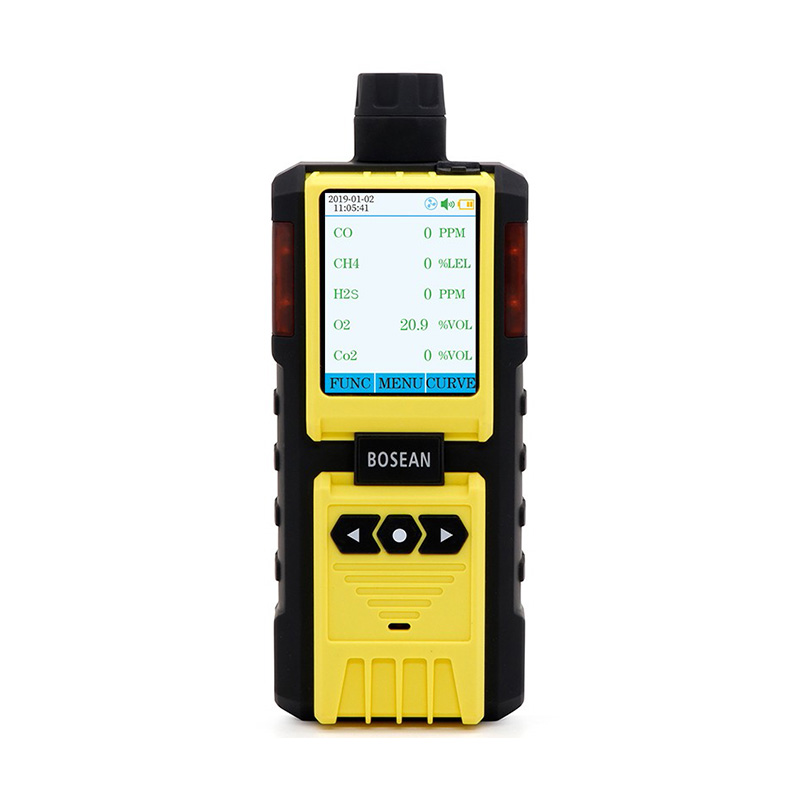
Bosean’s K-600 5 in 1 Multi Gas Detector offers a portable option for applications requiring the monitoring of multiple gas hazards. It features a built-in sampling pump, allowing gas samples to be drawn into the instrument rather than relying exclusively on natural diffusion.
The K-600 can be configured for combustible gases such as methane (CH₄), propane (C₃H₈), and hydrogen (H₂), alongside toxic gases and oxygen. Other available target gases include ammonia (NH₃), nitric oxide (NO), phosphine (PH₃), nitrogen dioxide (NO₂), hydrogen cyanide (HCN), and sulfur dioxide (SO₂). Additional gas configurations can be specified by customers in advance.
Its high-sensitivity sensor design is intended to provide good sensitivity and repeatability. The instrument also uses integrated circuit technology and digital-analog hybrid communication technology. Its enclosure combines high-strength engineering plastic with composite anti-slip rubber and is described as waterproof, dustproof, and explosion-proof.
For semiconductor facility operators, the K-600 may be considered for suitable inspection and maintenance tasks after confirming gas compatibility, detection ranges, sampling requirements, and applicable safety certifications. Its configuration should match the specific hazards rather than being assumed suitable for every process gas.
Maintaining Detection Performance Over Time
Even well-selected equipment requires regular maintenance. Calibration and functional checks help confirm that sensors respond appropriately to known gas concentrations. Operators should follow manufacturer recommendations for testing intervals, sensor servicing, battery management, and instrument storage.
Personnel training is equally important. Technicians need to understand alarm meanings, sampling limitations, potential interference, and emergency procedures. Consistent documentation also helps facility managers identify recurring problems and improve inspection schedules.
Strengthening Fab Safety Through Appropriate Gas Monitoring
Semiconductor support areas require a coordinated approach to gas safety. Effective monitoring combines hazard assessment, suitable sensor configurations, reliable sampling, maintenance, and clearly defined emergency procedures. Fixed monitoring provides continuous protection in critical locations, while portable instruments support flexible field inspections. With its pump-based sampling and configurable gas detection options, Bosean‘s K-600 offers one potential solution for facilities evaluating portable monitoring equipment. Careful application matching remains essential for dependable industrial gas detection systems.
