Reliable preclinical data depend on more than a well-designed experiment. A drug concentration reported by an analytical laboratory is meaningful only when the sample’s identity, condition, and measurement history can be verified. Weaknesses in these controls may compromise toxicokinetic interpretation and create questions during regulatory review.
Understanding preclinical bioanalysis is consequently essential to interpreting nonclinical evidence, particularly when studies support an Investigational New Drug (IND) application. Tigermed’s preclinical capabilities operate within this broader framework of scientific reliability and regulatory quality.
Chain of Custody: Protecting Sample Identity and Traceability
A biological sample passes through several stages after collection: labeling, processing, temporary storage, transportation, receipt, and analytical testing. Every transfer creates an opportunity for misidentification or undocumented handling. A robust chain-of-custody record connects each sample to its animal, collection time, matrix, study group, and analytical result.
Practical controls begin with a unique sample identifier and a documented collection schedule. Staff should record who collected and processed each specimen, when it entered storage, and whether it underwent any transfer or handling deviation. Reconciliation between collection records, shipment manifests, laboratory receipt logs, and analytical databases can expose missing or inconsistent entries before they affect the final report.
Electronic systems can strengthen traceability, but software alone cannot compensate for unclear procedures. A laboratory information management system should preserve audit trails, user access records, timestamps, and changes to sample status. In preclinical research services, sponsors should also examine how laboratories investigate discrepancies, document deviations, and communicate sample-related issues throughout a study.
Sample Stability: Managing Conditions Before Analysis
A sample’s analytical value may change if its storage or handling conditions are unsuitable. Temperature fluctuations, repeated freeze-thaw cycles, light exposure, delayed centrifugation, and inappropriate containers can affect analyte recovery or concentration. These risks vary according to the compound, biological matrix, and analytical method, so stability assumptions should be supported by experimental evidence.
A stability plan generally evaluates relevant conditions such as bench-top handling, freeze-thaw exposure, long-term frozen storage, and processed-sample stability. The study should reflect the actual conditions expected during collection, shipment, storage, and analysis. If samples are transported between facilities, temperature monitoring and predefined excursion procedures help establish whether the specimens remained suitable for testing.
Sample management also requires coordination between toxicology and analytical teams. Collection times should align with the toxicokinetic schedule, while aliquot volumes must account for the planned assays and potential repeat testing. These considerations are especially important in preclinical bioanalysis, where limited specimen volumes can restrict the investigation of unexpected results. Stability evidence should be retained with the study records rather than treated as a separate laboratory exercise.
Assay Validation and FDA Expectations
The FDA’s guidance on bioanalytical method validation describes recommendations for validating chromatographic and ligand-binding methods used in nonclinical and clinical studies that support regulatory submissions. It addresses method performance and study-sample analysis, including accuracy, precision, selectivity, sensitivity, calibration, and stability. The guidance provides a harmonized framework for assessing whether reported concentrations are scientifically reliable.
The appropriate validation approach depends on the analytical platform. Chromatographic methods, such as LC-MS/MS, are commonly applied to small molecules and their metabolites. Ligand-binding assays are frequently used for larger molecules, including therapeutic proteins. Although both approaches require evidence of method performance, their validation characteristics and acceptance criteria are not identical. Assay documentation should explain the method’s intended application and its suitability for the relevant analyte and matrix.
GLP requirements also need to be understood in context. FDA’s Good Laboratory Practice regulations govern applicable nonclinical laboratory studies, while the bioanalytical guidance addresses method validation and study-sample analysis for studies supporting regulatory submissions. These frameworks serve related but distinct purposes. A sponsor assessing preclinical research services should examine whether the study’s regulatory status, laboratory procedures, analytical records, and quality oversight are appropriately aligned.
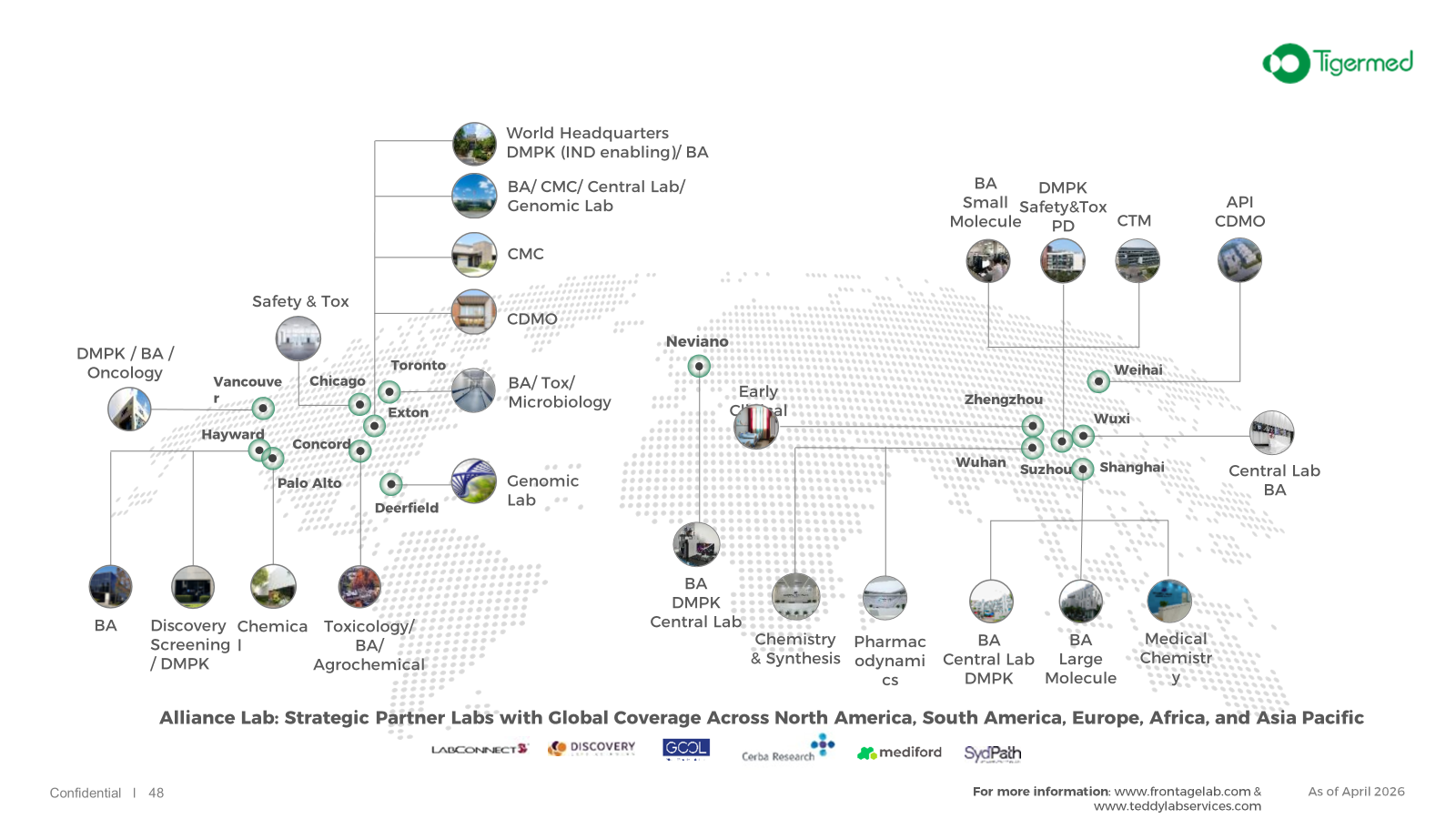
Tigermed describes its preclinical network as operating across China and the United States under synchronized SOPs and quality standards. Its published capabilities include substantial laboratory space globally, experience with GMP, GLP, and GCP, and AAALAC-accredited animal facilities. These organizational features provide context for sponsors evaluating cross-border study coordination, although individual project requirements and facility qualifications still need to be assessed directly.
Incurred Sample Reanalysis: Checking Results in Real Study Samples
Method validation demonstrates how an assay performs under controlled conditions, but actual study specimens can behave differently from prepared calibration standards and quality controls. Biological components, protein binding, metabolites, or matrix effects may influence measured concentrations. Incurred sample reanalysis (ISR) addresses this issue by testing a selected subset of study samples again in separate analytical runs.
FDA’s M10 guidance recommends incurred sample reanalysis (ISR) for nonclinical studies within its scope, generally covering each species involved. Sample selection should be predefined and representative of the concentration profile, with consideration given to samples around maximum concentration (Cmax) and during the elimination phase. For smaller datasets, a defined proportion of samples is reanalyzed, while larger datasets may use a reduced proportion after an initial subset has been assessed.
Acceptance criteria depend on the assay type. Under M10, the majority of repeat results should fall within an acceptable deviation from the mean of the original and repeat values, with chromatographic assays and ligand-binding assays having different permitted ranges. A failure to meet the overall criteria calls for investigation rather than selective replacement of inconvenient results. Documented procedures should explain sample selection, repeat testing, result comparison, and the handling of discrepancies.
Conclusion
Regulatory acceptance rests on a connected body of evidence: traceable specimens, justified stability conditions, fit-for-purpose validated methods, and scientifically controlled repeat analysis. A weakness at any stage can make otherwise useful toxicokinetic findings harder to interpret.
Sponsors assessing preclinical research services should look beyond laboratory capacity and ask how sample histories, assay performance, deviations, and investigations are documented. Tigermed’s cross-border preclinical platform offers a service framework for drug development, while project-specific quality records remain central to evaluating the reliability of each study’s data.
