Clear control markings might enter an appliance discussion as a preference and later become an agreed requirement. The phrase has stayed the same, but its status has changed.
A technical brief for a refrigerator manufacturer needs to make that difference visible. Features acquire meaning through their intended purpose, their relationship to the proposed product and the questions still unresolved. A record follows those connections through clarification and revision.
Giving Each Feature a Purpose
An unexplained characteristic gives no reason for its place in a product. Clear control markings, for example, could be requested to make the appliance’s controls more understandable during everyday use. This is an illustrative requirement, not a description of an available model. Separating the characteristic from its purpose exposes the question the proposed feature is meant to answer.
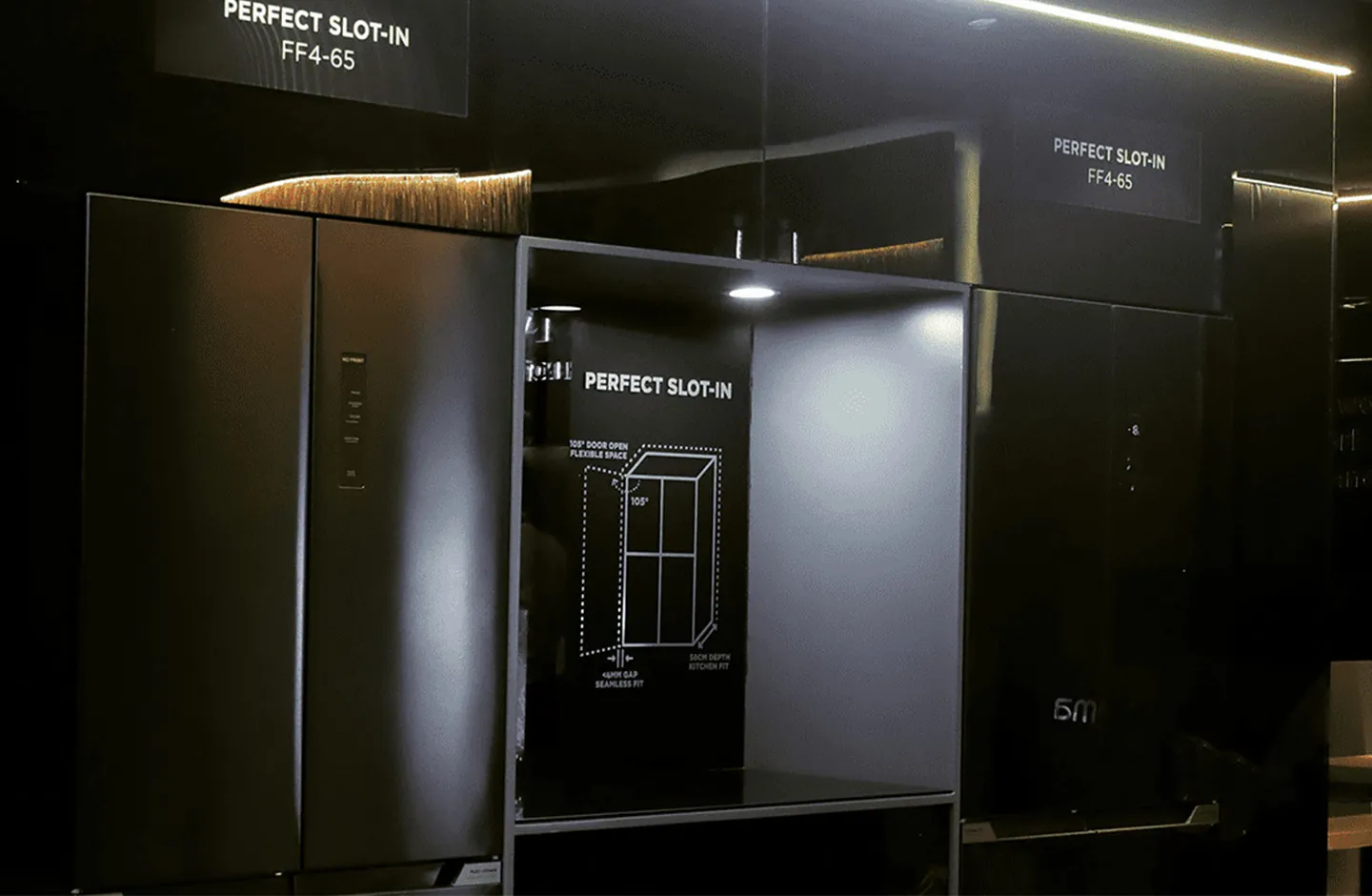
The proposed product format provides context. A request referring only to controls leaves the appliance under discussion unidentified; recording its intended format ties the request to a defined product concept. The corresponding entry can retain questions about the selected model’s actual controls. This separates the desired characteristic from knowledge of the existing arrangement.
Purpose also makes alternative interpretations easier to recognize. A partner may prefer a control arrangement while mainly seeking understandable markings. The refrigerator manufacturer can be asked about the relationship between them without treating either as proof that a solution exists. Those statements are related, but they are not equivalent: one describes a preferred arrangement, while the other explains the intended benefit.
Distinguishing Requirements from Preferences and Questions
Confirmed requirements, preferences and open questions carry different kinds of information. These categories concern the status of the brief’s contents; none demonstrates that an appliance satisfies a requirement.
An open question identifies information that remains unknown. A preference keeps a desired characteristic open for discussion. A confirmed requirement states an agreed product need.
A technical brief gives a refrigerator manufacturer a starting point for ODM discussion. It should define the target market, product format, storage needs and appearance priorities, distinguishing essential requirements from preferences.
Homa Appliances combines manufacturing, international ODM solutions, supply management and export experience. Its CMF support helps partners select and preview colours, materials and finishes, translating appearance preferences into development inputs.
In the illustrative entry, readable control information might be agreed as a requirement while a particular arrangement remains a preference. The actual markings on a selected model may still be an open question.
Recording all three separately prevents agreement on the purpose from being mistaken for acceptance of every proposed detail. A brief can therefore contain a confirmed objective alongside unanswered questions about its realization.
Locating the Effect of a Clarification
A clarification changes the record at the point where understanding has changed. Nothing here settles other characteristics or confirms a model’s suitability. A later discussion could establish distinguishable control functions as the priority, while the suggested arrangement is optional. That statement affects the control entry. Its purpose becomes more explicit, and its preferred arrangement remains open to discussion.
The affected item can retain the clarified wording and a note describing the change from its previous state. A response from the refrigerator manufacturer then has an identifiable connection to the question it addressed. If the response concerns the intended purpose, the model question remains unresolved until evidence answers it. A partial response cannot resolve a question it has not answered.
Stable item references keep the connection visible even when wording develops. The control entry can keep its identity while its explanation is refined. A new request concerning a different feature needs its own record. Otherwise, an expanded sentence could make unrelated requirements appear to have been clarified together. The change is localized by meaning as well as by its place in the document.
Keeping Revision History Readable
Differences between versions reveal more than the length of the brief. A comparison can show that the control purpose was clarified, the arrangement stayed a preference and the question about actual model details remains unanswered. Each outcome belongs to the item. Unchanged entries retain their status instead of acquiring implied approval because a new document has been issued.
A revision note can distinguish new wording from a new decision. Editorial clarification may restate the same requirement, whereas a changed requirement alters what is being requested. Recording the reason alongside the item gives that distinction substance. The refrigerator manufacturer and its partner have a common reference for identifying which technical matters changed and which were simply restated.
Before a sample review, the record can identify the requirements to examine and the questions still needing answers. Its version history explains how those entries reached their current form.
For an ODM discussion with Homa Appliances, the current brief can bring the product format, appearance choices and outstanding technical questions into one reference. Keeping that reference up to date helps the buyer explain changes clearly and review the proposal against the agreed requirements.
The control clarification has now altered one entry without silently changing the rest of the brief. Its purpose is explicit, its preferred arrangement remains negotiable and its model question remains visible. Comparing the revisions preserves all three outcomes alongside the unchanged items. The revised record shows what changed and what remains unresolved in the product concept.
