Choosing a school furniture supplier is a long-term procurement decision, especially for projects involving multiple classrooms, laboratories, libraries, dormitories, or entire campuses. Before signing a contract, buyers should look beyond product appearance and quoted prices. A supplier’s manufacturing history, project experience, production capacity, customization ability, logistics support, and after-sales service can all affect whether a school furniture project is delivered smoothly.
Check Manufacturing Experience and Project History
A supplier’s operating history can provide an initial indication of whether it has experience handling long-term commercial orders. Buyers should check when the company began manufacturing, how long it has served overseas markets, and whether its experience is relevant to educational projects rather than unrelated furniture categories.
Project references are equally important. Ask whether the supplier has supplied furniture for schools, universities, government projects, contractors, or other institutional customers. A supplier with experience across different education environments may be better prepared to understand requirements such as classroom layouts, student age groups, storage needs, and large-scale installation.
For example, Everpretty Furniture is a B2B campus furniture supplier with more than 30 years of manufacturing experience. Its official information states that it has exported to more than 68 countries and served more than 71,520 customers, with project experience involving governments, contractors, international schools, private schools, wholesalers, and distributors. These figures provide buyers with measurable information to investigate rather than relying only on general marketing statements.
Verify Production Capacity and Product Coverage
A supplier’s track record should also be evaluated through its actual production capabilities. Buyers can ask whether manufacturing is carried out in self-owned facilities, what production lines are available, and whether the supplier can handle the expected order volume.
Product coverage matters when a project requires more than standard student desks and chairs. A school may need classroom furniture, library furniture, laboratory furniture, kindergarten furniture, dormitory furniture, canteen furniture, and public-area furniture from the same supplier. Reviewing the supplier’s product categories can help determine whether it is equipped for single-room orders or broader campus projects.
Everpretty’s product range covers multiple educational environments, including classrooms, libraries, laboratories, kindergartens, dormitories, and canteens. Its official site also describes a 79,100+ square meter production base and multiple production lines for commercial furniture.
Review Customization and Project Support
Standard products may not fit every educational project. Room dimensions, local regulations, teaching methods, school branding, and available floor space can require changes to furniture dimensions, colors, materials, or structures.
Therefore, buyers should confirm exactly what customization the supplier can provide before signing a contract. It is useful to ask whether the supplier offers OEM or ODM services, design support, prototypes, technical drawings, and sample approval. Buyers should also clarify whether design assistance covers individual products or complete room and campus layouts.
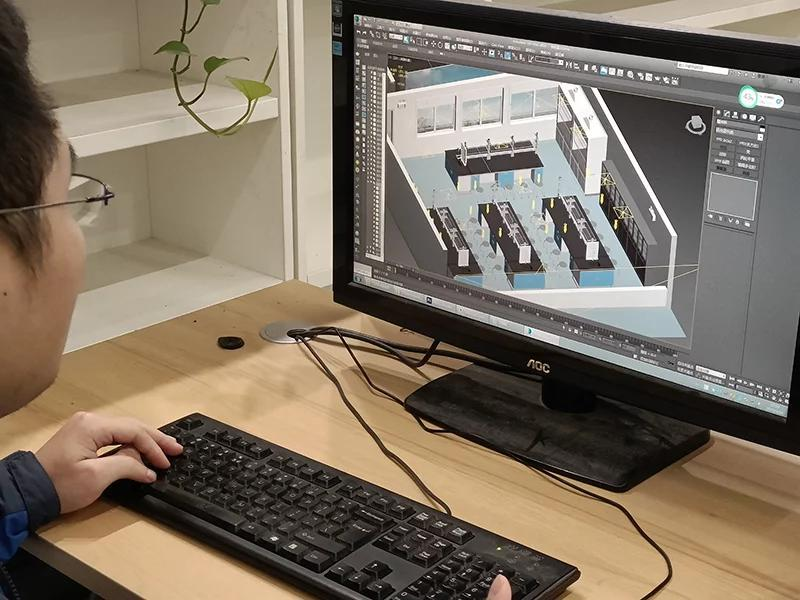
Everpretty states that it provides OEM and ODM services, project consulting, planning, design, sampling, manufacturing, delivery, installation, and after-order service. Its design services include individual classroom planning as well as entire-school solutions and 3D model development.
Examine Export and Delivery Capability
International school furniture projects involve more than manufacturing. Delivery arrangements, documentation, shipping methods, installation, and communication can significantly influence project schedules.
Before committing, buyers should ask which trade terms and transportation options the supplier supports. For overseas projects, it is also worth checking whether the supplier has experience with sea, air, rail, truck, or express transportation and whether door-to-door delivery can be arranged when required.
A supplier’s communication process should receive similar attention. Buyers can assess whether the team communicates clearly in English, provides timely documentation, and maintains a defined project-management process. These factors become particularly important when the customer, contractor, manufacturer, and project site are located in different countries.
Confirm Warranty and After-Sales Service
The supplier relationship should not end when the containers leave the factory. Buyers should review warranty coverage, installation assistance, spare-parts arrangements, inspection procedures, and the process for handling quality issues.
Contract terms should clearly define responsibilities for product defects, delivery problems, installation requirements, and after-sales communication. A written service process is generally more useful than an informal promise because both parties can refer to the agreed terms if a problem occurs.
Buyers should also compare the supplier’s minimum order quantity and warranty period with their project requirements. For smaller distributors or agents, these conditions can influence inventory planning and cash-flow management.
Make the Final Decision Using Verifiable Evidence
A reliable supplier evaluation should combine several types of evidence instead of depending on one impressive figure. Buyers can create a simple checklist covering manufacturing history, relevant project references, factory capacity, product range, customization, certifications, export experience, logistics, warranty, and after-sales support.
For schools and contractors, the goal is not simply to identify a furniture seller with attractive products. The more important question is whether the supplier can consistently support the complete procurement process from planning through delivery and after-sales service.
As an educational furniture manufacturer, Everpretty combines campus furniture manufacturing with project-oriented services, including design support, OEM/ODM, production, international delivery, installation, and after-order assistance. Its experience with overseas education projects and its broad furniture coverage give B2B buyers a practical basis for evaluating its suitability for their specific procurement requirements.
