The logistics dock is a critical connection point between transportation and warehouse operations. While many facilities have automated their internal storage and handling processes, truck loading and unloading may still involve labor-intensive tasks.
This technological gap creates severe throughput delays that ripple across the entire fulfillment network. When inbound shipments arrive faster than human crews can safely process them, distribution centers experience cascading backlogs and escalating fees.
To maintain competitive fulfillment speeds, operations directors must critically identify these specific structural chokepoints. By proactively deploying advanced Robotic Truck Loading and Unloading, supply chain managers can finally close this automation gap.
Transitioning to automated dock systems transforms this chaotic transition zone into a highly predictable material flow channel. Dedicated industry manufacturers like BlueSword engineer sophisticated systems to seamlessly bridge the gap between exterior transportation fleets and internal grids, ensuring continuous operational velocity.
Resolving Cognitive Delays and Mixed Cargo Inefficiencies
The initial operational bottleneck at any distribution dock occurs the very moment trailer doors open to reveal unstructured, shifted, or highly mixed inventory. Human workers must visually assess the load, sort varying dimensions, and physically maneuver cartons before pallets can be properly formed, consuming valuable operational minutes.
Deploying a sophisticated loading and unloading robot can help reduce these decision-making delays through the integration of high-precision 3D visual recognition technology. These advanced spatial vision systems accurately identify the exact position, dimensions, and stacking posture of individual items, enabling the flexible grabbing of different carton sizes without human intervention.
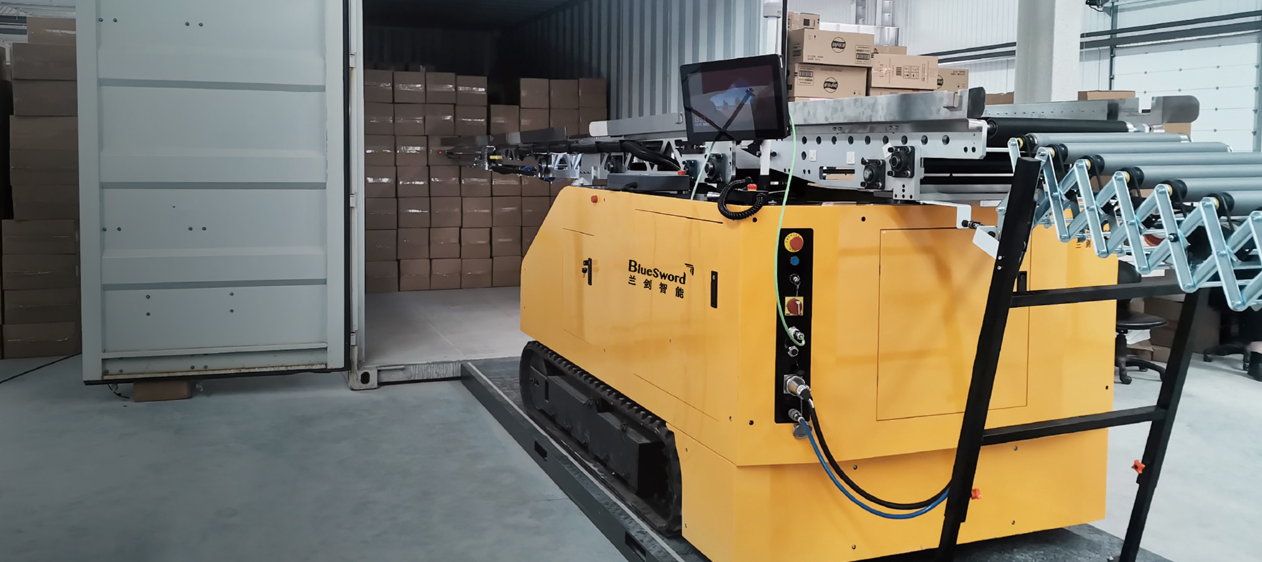
The Hammerhead Robot handles corrugated cartons, material bags, and totes, helping reduce manual handling during truck loading and unloading.
Beyond the complexities of visual sorting, the sheer physical toll of transferring dense materials creates massive operational slowdowns that compound over time. Human operators inevitably experience severe physical fatigue over the course of a demanding shift, which directly reduces their hourly throughput and significantly increases the statistical risk of workplace injuries.
Mechanizing this strenuous task with Robotic Truck Loading and Unloading can help maintain more consistent handling throughput under suitable operating conditions. Designed for high utilization, the Hammerhead robot can be quickly repositioned across multiple loading docks to service areas experiencing sudden volume spikes.
Its mobility allows the robot to be quickly repositioned across multiple loading docks, helping facilities allocate equipment to areas with changing workloads and reduce truck waiting times.
Accelerating Dock Transit and Adapting to Variable Fleets
Another significant logistics chokepoint arises from the slow transfer methods inherent to traditional manual processes. When distribution centers process seasonal volume spikes, moving single boxes manually simply cannot keep pace with aggressive supply chain schedules.
Powered by a six-axis robotic arm and high-precision 3D vision, BlueSword’s Hammerhead Loading & Unloading Robot can handle 1–4 cartons per pick, with a combined payload of up to 60 kg. Depending on carton dimensions, it achieves unloading rates of up to 1000 cartons per hour, while supporting various truck types and docking configurations.
This higher handling capacity can help reduce manual lifting bottlenecks and improve dock throughput during periods of increased shipping and receiving demand.
Flexible Robotic Truck Loading and Unloading for Different Truck Types
The inherent variability in commercial transportation fleets presents a final, frustrating bottleneck for standardized warehouse dock operations. Non-standard truck dimensions and different chassis heights often force warehouse teams to abandon rigid automated conveyors in favor of manual labor, completely breaking the continuous material chain.
The Hammerhead Robot is designed to accommodate various vans and containers, supporting flexible deployment across different loading dock configurations. Truck compartment dimensions should be checked against the equipment’s specified compatibility requirements before deployment.
Enhancing Dock Safety and Warehouse Automation Integration
The Hammerhead Robot uses Laser-SLAM navigation with 360° obstacle avoidance to detect obstacles during operation and support safer loading and unloading activities.
Modernizing the logistics dock is an absolute necessity for industrial organizations aiming to achieve frictionless end-to-end material handling. Frequent dock accidents and poor integration with internal material handling systems create severe logistical bottlenecks that disrupt global distribution.
Implementing a suitable loading and unloading robot can help operations managers address manual handling constraints and improve material flow at the logistics dock. BlueSword‘s loading and unloading robot can integrate with manual and automated palletizing systems, as well as warehouse management systems (WMS), supporting coordinated material handling between the dock and internal warehouse operations.
Addressing dock-level bottlenecks can help distribution centers respond more effectively to fluctuations in shipping and receiving volumes. Ultimately, embracing this specialized robotic technology enables logistics enterprises to maximize their overall daily throughput, significantly lower their ongoing labor dependencies, and secure highly profitable, resilient supply chain operations for the future.
