A promising product can still become a difficult investment if sample approval, order quantities, and production schedules are poorly coordinated. Dealers entering the electric mobility market need to understand not only what a vehicle offers, but also how quickly a supplier can provide samples, what purchase volume is required, and how reliably repeat orders can be scheduled.
Working with an E scooter supplier involves several decisions before the first commercial shipment arrives, and each one can affect cash flow, launch timing, and customer expectations. LUYUAN, an established electric two-wheeler manufacturer, provides a relevant starting point for businesses assessing product options and potential distribution partnerships.
Use Samples to Verify More Than Appearance
A product sample should be treated as a practical evaluation tool rather than a showroom display. Buyers can inspect assembly quality, control placement, riding comfort, braking response, and the finish of visible components. A test ride may also reveal differences in handling or acceleration that cannot be understood from photographs alone. Before requesting samples, dealers should prepare a checklist based on local customer needs and the conditions in which the vehicle is likely to operate.
Technical verification matters just as much as physical inspection. Motor power, battery specifications, charging requirements, maximum speed, and stated range should match the documentation for the exact configuration being evaluated. Range figures deserve particular attention because rider weight, terrain, temperature, speed, and stopping frequency can affect real-world results. A sample assessment helps an E scooter supplier and its prospective buyer establish which specifications need further clarification before a larger purchase is approved.
The cost and timing of sampling should be agreed upon in advance. Buyers can ask whether the sample price differs from the bulk-order price, whether shipping is charged separately, and whether sample costs may be credited against a subsequent order. It is also useful to confirm whether the sample represents the standard production configuration or includes components that may not be available in regular orders. Written records of any requested changes reduce the risk of approving one specification and receiving another.
Understand MOQ and Its Effect on Cash Flow
Minimum order quantity, commonly called MOQ, determines how much stock a buyer must commit to purchasing. A lower MOQ can help a new distributor test demand without tying up too much capital, while a higher threshold may offer access to more favorable unit pricing. Neither arrangement is automatically better: the appropriate quantity depends on expected sales, storage capacity, delivery frequency, and the funds available for inventory.
Mixed-model orders can make an initial assortment more manageable, but the rules vary between suppliers. Some may allow several configurations within one order, while others set separate minimums for individual models, colors, or battery options. Buyers should also clarify whether customization changes the MOQ. For businesses comparing E scooter manufacturers, these details reveal how easily the supplier’s production structure can accommodate a gradual market launch.
Inventory planning should account for more than the number of vehicles sold in an optimistic forecast. A new dealer may need to retain cash for marketing, spare parts, warranty claims, and operating expenses after the first shipment arrives. A conservative order plan can leave room to learn which configurations perform well before expanding the range. Suppliers that explain MOQ rules transparently make it easier for buyers to compare purchasing scenarios and estimate their exposure before placing an order.
Calculate Lead Time From Approval to Delivery
Production lead time is not always the same as the time between placing an order and receiving the goods. The overall schedule may include specification confirmation, deposit processing, component preparation, manufacturing, quality inspection, export documentation, and international transport. Buyers should request a breakdown of these stages and establish which event officially starts the production clock. Such clarity is especially useful when a distributor plans a launch around a seasonal demand period or a local retail campaign.
The delivery estimate should also distinguish factory production from shipping and customs clearance. Freight schedules can change, while port congestion, documentation issues, and local import procedures may extend the arrival date. A practical sourcing plan includes a reasonable buffer rather than assuming every stage will finish on the earliest quoted date. Dealers should ask how production delays are communicated and whether the supplier can provide progress updates at agreed milestones.
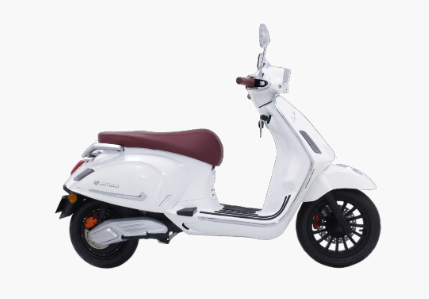
LUYUAN’s official MQN8 product page gives buyers a concrete model reference when assessing a potential order. Rather than relying on a product name or general catalogue description alone, a prospective distributor can use the model page to identify the relevant configuration and request confirmation of its current specifications, sample availability, MOQ, and production schedule. Those commercial details should be verified directly before an order is placed, since availability and lead times can vary by configuration and destination market.
Conclusion
Successful sourcing depends on a sequence of verifiable decisions: assess a sample, calculate a sustainable order quantity, map the full delivery schedule, and document the responsibilities attached to the purchase. An experienced E scooter supplier should be able to explain these steps clearly, while buyers should verify every commercial commitment against their own market requirements.
For distributors evaluating E scooter manufacturers, the objective is not simply to secure a low initial price but to establish a repeatable purchasing process that supports stable inventory and dependable customer service. LUYUAN offers a potential starting point for exploring electric two-wheeler distribution, with each proposed order best assessed through confirmed specifications, written terms, and realistic production and shipping estimates.
