Conveyor belts are widely used in industries such as laundry processing, logistics, food handling, and manufacturing. When a belt becomes damaged or requires replacement, selecting the right repair equipment can improve installation efficiency and help maintain stable production schedules. Choosing a suitable belt lacing machine involves more than comparing prices. Buyers should evaluate compatibility, fastening quality, operating method, and long-term service support before making a purchasing decision.
Understanding Different Conveyor Belt Repair Requirements
Every conveyor system operates under different conditions. Belt thickness, operating speed, working environment, and maintenance frequency all influence the type of fastening equipment required. Before selecting a machine, purchasing teams should identify the belt material, the fastener specification, and the expected repair volume.
Some production facilities perform only occasional belt replacement, while others carry out frequent maintenance across multiple production lines. In these situations, choosing equipment that can provide consistent fastening quality becomes an important consideration for reducing installation variations between operators.
Industrial buyers should also consider whether the machine can support future maintenance needs. Equipment with flexible compatibility often provides greater value when production requirements expand or when different conveyor belts are introduced into the factory.
Why Hydraulic Belt Fastener Machine Technology Improves Installation
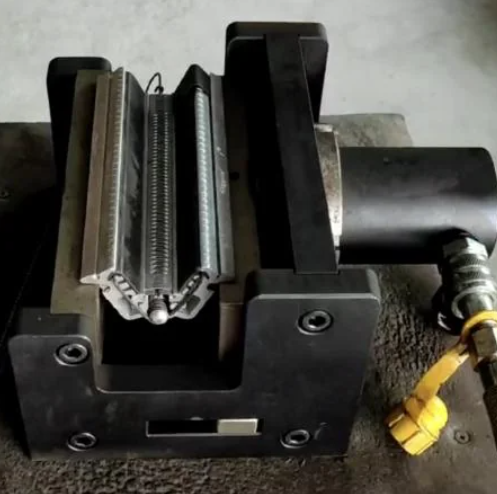
A hydraulic belt fastener machine applies pressure through a hydraulic mechanism instead of relying entirely on manual force. This allows fasteners to be installed with more consistent compression, helping operators achieve uniform fastening results across the entire belt width.
Hydraulic systems are especially useful when working with wire buckle fasteners that require stable pressure during installation. Consistent fastening can contribute to smoother conveyor operation and reduce the possibility of uneven buckle alignment caused by inconsistent manual force.
One example is the Hydraulic Belt Fastener Machine designed for 25# and 30# wire buckles. It is developed for quick installation in the washing industry and combines hydraulic operation with belt fastener applications, making routine conveyor belt maintenance more efficient for industrial users.
Matching the Machine with Fastener Specifications
Fastener compatibility is one of the first factors that procurement personnel should verify. Different wire buckle sizes require matching installation equipment to achieve proper fastening performance. Purchasing a machine without confirming fastener specifications may result in installation difficulties or unnecessary equipment replacement.
When reviewing product information, buyers should check whether the machine supports the buckle models currently used in their facilities. This helps reduce compatibility issues during maintenance while simplifying spare parts management.
Companies offering specialized fastening equipment often provide technical guidance before purchase. This allows distributors and industrial customers to confirm whether a particular solution fits their maintenance requirements before placing larger orders.
Material Quality and Manufacturing Precision Matter
The durability of a fastening machine depends not only on its structure but also on the manufacturing process and material selection. Precision machining can help maintain stable pressure distribution throughout repeated installation cycles, while durable materials contribute to longer service life under industrial operating conditions.
Some manufacturers also invest in specialized materials that are available only through a limited number of production sources. These materials can improve structural performance and support reliable operation during continuous industrial use.
According to the product information provided by Intake, they place significant attention on manufacturing quality and material selection. Their production process aims to deliver products with performance comparable to imported alternatives while maintaining competitive procurement costs for business customers.
Evaluating Supplier Support Beyond the Equipment
Purchasing industrial equipment often involves more than comparing technical specifications. After-sales support, delivery schedules, and application guidance all influence purchasing decisions, particularly for distributors and maintenance service providers.
Practical support such as operation videos can shorten the learning process for technicians. Clear visual demonstrations also help reduce installation errors during initial equipment use, especially when introducing new maintenance procedures across multiple production sites.
Another useful consideration is sample availability. Free samples allow potential partners to evaluate product suitability before larger purchasing commitments, providing additional confidence during supplier selection.
Delivery, Customization, and Distribution Opportunities
Industrial maintenance schedules frequently depend on timely equipment availability. Short delivery periods can help distributors maintain inventory levels while allowing factories to respond more quickly when conveyor repairs become necessary.
For projects requiring unique configurations, customization capabilities may also become important. Some applications require modifications based on production environments, belt dimensions, or fastening preferences. Working with suppliers capable of providing customized solutions can simplify project planning.
Intake also supports distributors and agents by providing customization services, free samples, and relatively fast delivery schedules. Standard products are generally shipped within three days after order confirmation, while customized products are typically completed within about one week, allowing partners to plan inventory more efficiently.
Cost Should Be Considered Together with Long-Term Value
Purchase price is naturally an important factor, but evaluating only the initial equipment cost may overlook long-term operational value. Equipment durability, maintenance frequency, installation efficiency, and technical support all contribute to the overall cost of ownership throughout the product lifecycle.
Industrial buyers should compare supplier services together with product quality. Stable manufacturing processes, consistent fastening performance, and responsive communication often reduce operational interruptions that may otherwise increase maintenance costs over time.
For businesses purchasing larger quantities, commercial policies such as order discounts can further improve procurement efficiency. These considerations become particularly relevant for distributors serving multiple industrial customers.
Making a Practical Selection for Conveyor Belt Maintenance
Selecting the right belt lacing machine requires balancing technical compatibility, operational efficiency, supplier support, and long-term purchasing value. Understanding fastener specifications, evaluating hydraulic installation methods, and reviewing delivery capabilities all contribute to more informed purchasing decisions.
When businesses evaluate suppliers carefully, they can identify equipment that matches their production environment instead of focusing only on short-term pricing. Suppliers such as Intake combine hydraulic fastening solutions, customization services, sample support, and distributor cooperation to serve industrial customers seeking practical conveyor belt repair equipment. For buyers considering a hydraulic belt fastener machine, comparing these factors can help establish a purchasing strategy that supports both current maintenance needs and future business development.
