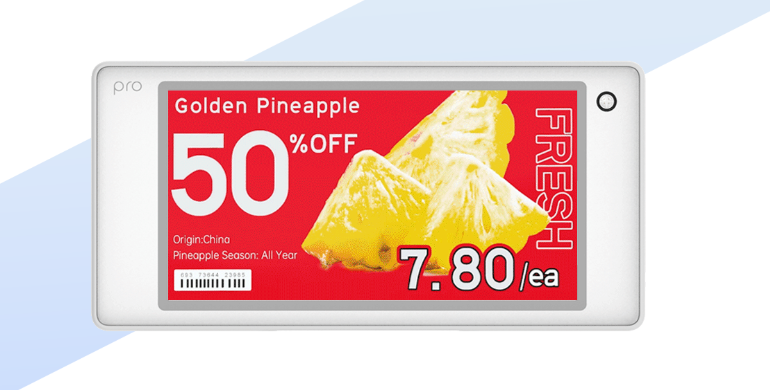
Deploying electronic shelf labels is not simply about replacing paper tags with screens. A complete electronic shelf label system consists of several interconnected components that work together to deliver real‑time pricing, inventory accuracy, and centralised control. Without understanding these building blocks, retailers risk purchasing incompatible hardware or missing critical software capabilities. Below is a breakdown of the essential elements that constitute a robust electronic shelf label system, using market‑leading technology as a reference.
The ESL Tag: Display Hardware with Advanced Features
At the heart of any electronic shelf label system are the tags themselves—the battery‑powered displays attached to shelf edges. Modern tags go far beyond simple black‑and‑white pricing. A premium electronic shelf label now supports multiple colors, allowing retailers to highlight promotions, expiration alerts, or brand logos directly on the shelf. The Hanshow Nebular Pro series exemplifies this evolution, offering colorful displays that support multiple colors. Retailers and brands can create eye‑catching and visually stunning multi‑color displays that will captivate customers’ attention and elevate their brand’s image. When selecting an electronic shelf label, buyers must evaluate screen size, color capability, battery life, and durability ratings such as IP68 protection.
Communication Infrastructure: Base Stations and Protocols
Electronic shelf label tags do not operate independently. A complete electronic shelf label system requires a network of base stations (also called access points or gateways) that transmit price updates from a central server to every ESL tag. These base stations use proprietary or standard wireless protocols (e.g., 2.4 GHz, Bluetooth, or sub‑GHz) designed for low power consumption and high concurrency—often handling thousands of tags per base station. The quality of the communication infrastructure directly affects update speed and reliability. Without robust base stations, an electronic shelf label system suffers from lag, missing updates, or out‑of‑sync displays. Therefore, retailers should choose an ESL provider that offers field‑proven base station coverage for their store layout.
Software and Cloud Management Platform
The third critical component is the software layer that controls the entire electronic shelf label system. This includes a central server (on‑premises or cloud‑based), a user interface for managing pricing and promotions, APIs for integrating with POS and inventory systems, and device management tools for monitoring battery life and connectivity. Advanced software enables scheduling of price changes, template design for multi‑color displays, and real‑time audit trails. Without intuitive software, even the most sophisticated electronic shelf label hardware becomes difficult to operate at scale. Retailers should prioritise platforms that offer remote management, role‑based access, and seamless third‑party integrations.
Seamless Integration for Maximum Value
A complete electronic shelf label system is not a collection of isolated parts—it is an integrated ecosystem of tags, base stations, and software. Hanshow provides exactly that with the Nebular Pro series. Featuring colorful multi‑color displays, robust hardware, and proven communication protocols, Hanshow’s electronic shelf label system empowers retailers to captivate customers, reduce operational costs, and maintain pricing accuracy across thousands of products. Partner with this company to build a complete electronic shelf label infrastructure that works as one unified solution.
