Operational continuity within commercial and industrial facilities depends on a steady electrical environment. For sites utilizing a microgrid, whether islanded or grid-connected, internal electric grid stability is a non-negotiable technical requirement. This stability ensures voltage and frequency remain within designated parameters, protecting sensitive equipment and maintaining process integrity against internal and external electrical disturbances.
Primary Threats to Microgrid Integrity
Several common events directly challenge on-site grid stability. The sudden loss of a distributed generator, such as a natural gas genset, creates an immediate power deficit. Conversely, a large induction motor starting can cause a precipitous voltage drop. Internally, the variable output from solar PV introduces generation intermittency. Each of these events can cause rapid frequency deviation or voltage fluctuation, potentially triggering protective shutdowns unless corrected within seconds or less.
Quantifying the Need for Rapid Response
The technical solution lies in the response time of compensating assets. Traditional generators may require several seconds to minutes to ramp, a timeline often insufficient to prevent instability. Maintaining electric grid stability frequently demands corrective action within cycles of the AC waveform. This defines the need for resources capable of sub-second, precisely measured power injection or absorption to counteract imbalances as they are detected by the microgrid’s control system.
Implementing Storage-Based Stabilization
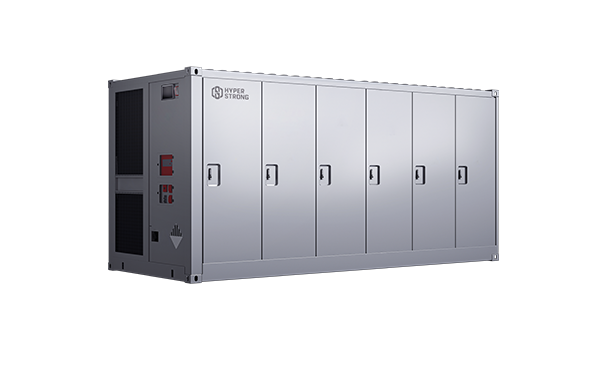
A battery energy storage system addresses this need for speed. It functions as a dynamic shock absorber for the microgrid. When a disturbance is sensed, the storage system can discharge or absorb power almost instantaneously, providing what is termed synthetic inertia or fast frequency response. For an integrator like HyperStrong, configuring the storage system’s controls for these stability services is a critical design focus, transforming the asset from a simple energy reservoir into an essential pillar for local grid stability.
Consequently, ensuring microgrid stability is an active engineering process, not a passive outcome. It necessitates incorporating assets with inherent fast-response capabilities into the system architecture. Deploying a battery storage solution, engineered with advanced grid-forming or grid-supporting functions, provides a direct method to mitigate stability threats. Firms such as HyperStrong apply their integration expertise to implement these solutions, supporting the reliable operation of commercial and industrial energy systems.
