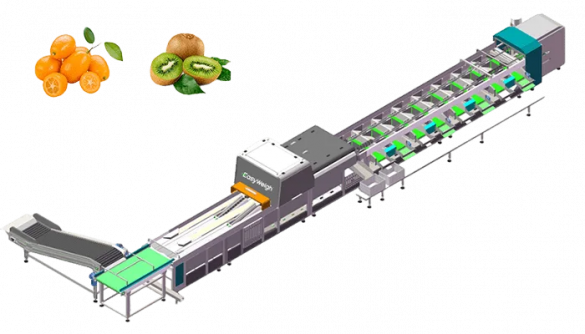
A thorough assessment of plant requirements, material properties, and optical capacities is necessary when acquiring separation technology for industrial use. Claims made by vendors about the accuracy of sensors and the capacity of line speeds might be difficult for purchasing managers to understand.
Establishing a clear equipment evaluation framework prevents costly capital acquisition mistakes and ensures long-term operational viability. Selecting the correct hardware requires matching specific machine parameters against real factory floor challenges.
Defining Defect Profiles and Optical Sorting Criteria
Raw material variations dictate every foundational requirement during equipment procurement cycles across modern manufacturing plants. Facilities handling agricultural produce require vastly different optical configurations than operations processing manufactured plastics. Engineers must catalog specific contaminant types, color ranges, and allowable defect tolerances prior to reviewing catalogs.
Establishing exact physical dimensions and moisture content prevents mismatched sensor selection during the preliminary planning phase. High moisture levels alter light absorption properties, directly impacting how cameras detect subtle surface anomalies. Detailed material profiling guarantees that chosen inspection hardware matches real-world factory floor challenges without unexpected performance degradation.
Understanding upstream supply chain fluctuations helps engineering teams specify sorting parameters that accommodate seasonal crop variations. Raw inputs rarely exhibit uniform characteristics, necessitating adaptable software algorithms capable of handling variable feed rates. Thorough baseline data collection eliminates costly procurement guesswork and ensures optimal system performance from day one.
Selecting Sensor Technologies and Illumination Configurations
High-resolution sensor arrays form the core sensory engine of modern inspection hardware across automated production lines. Monochrome cameras suffice for basic light-versus-dark color separation, whereas full-color RGB sensors are mandatory for subtle blemish detection. Line-scan cameras capture continuous high-speed imagery, ensuring zero blind spots across wide, fast-moving transport belts under heavy industrial usage.
Illumination systems dictate how clearly sensors capture surface textures and color variations under heavy production loads. Multi-angle LED lighting arrays eliminate harsh shadows that routinely obscure microscopic cracks or internal discoloration from view. Matching light wavelengths to specific product colors maximizes contrast ratios for superior defect recognition accuracy.
Advanced optical filters isolate unwanted spectral bands to flag foreign organic matter or burnt fragments instantly. Engineers must analyze whether backlighting or front-lighting configurations best suit transparent, translucent, or opaque product types. Optimal lighting design prevents false rejections and maintains high processing yields throughout continuous industrial shifts.
Configuring Pneumatic Ejection Dynamics for High-Speed Separation
Transport velocity must align perfectly with camera frame capture rates to prevent motion blur and misclassification errors. Selecting an advanced optical sorting machine requires verifying that drive mechanisms maintain steady movement under heavy loads. Inadequate belt stability causes product tumbling, leading to inaccurate diversion trajectories during high-volume production runs.
Pneumatic rejection valves execute physical separation based on central processor commands generated milliseconds prior to diversion. Easyweigh configures precision valve assemblies that respond instantly without disturbing adjacent marketable consumer items on the belt. Reliable diversion hardware minimizes collateral waste and preserves overall batch yield percentages across intensive shifts.
Air pressure stability and nozzle spacing dictate the physical accuracy of contaminant removal on high-speed lines. Maintenance teams must inspect valve seals and pneumatic lines regularly to prevent pressure drops during operation. Precision engineering in the ejection zone ensures zero defect leakage into finished product packaging.
Integrating Mass Verification via Weight Sorting Architecture
Standalone vision performance means little if inspection hardware fails to communicate with surrounding factory equipment seamlessly. Modern lines require simultaneous mass verification alongside visual scanning to catch density flaws hidden beneath outer surfaces. Integrating dedicated Weight Sorting modules creates a comprehensive quality screening ecosystem that eliminates operational blind spots.
Supervisory control software must interface smoothly with existing facility automation networks and enterprise planning databases. Easyweigh builds connectivity-ready architectures that export real-time yield analytics and diagnostic logs directly to management dashboards. Centralized touchscreen interfaces reduce operator training overhead and minimize manual data entry errors.
Data transparency builds immense trust between manufacturers and their global supply chain partners during quality audits. Comprehensive digital logging satisfies rigorous regulatory mandates while providing actionable insights for continuous process improvement. Interoperable software systems empower technical teams to resolve minor anomalies before catastrophic failures occur.
Evaluating Lifecycle Costs and Vendor Support Infrastructure
Initial purchase pricing represents only a fraction of total lifecycle expenditure for industrial processing machinery. Maintenance overhead, spare parts availability, and energy consumption heavily influence long-term financial viability and plant budgets. Procurement teams must evaluate comprehensive supplier commitments before signing capital equipment supply contracts.
Purchasing a commercial optical sorting machine involves verifying technical support networks and operator training availability. Advanced Weight Sorting parameters ensure mass metrics align seamlessly with optical data across various product runs. As an experienced manufacturer, Easyweigh supports both standard equipment and custom OEM / ODM services, to adapt sorting solutions for unique production‑line layouts and special product‑grading requirements. Easyweigh delivers dependable engineering solutions backed by comprehensive technical assistance throughout the equipment lifecycle.
Long-term equipment durability protects capital allocations against premature technological obsolescence in competitive markets. Supplier warranties and service level agreements provide essential security for plant managers operating under tight production schedules. Strategic procurement decisions secure sustainable commercial growth and operational excellence.
Final Procurement Roadmap
Executing a successful acquisition strategy transforms raw production lines into elite, quality-driven operational powerhouses. Investing in the right optical sorting machine safeguards plant profitability by eliminating human error and product giveaway. Pairing vision technology with precise Weight Sorting frameworks guarantees uncompromising product purity and sustainable market competitiveness.
